
How to Regulate Your Emotions
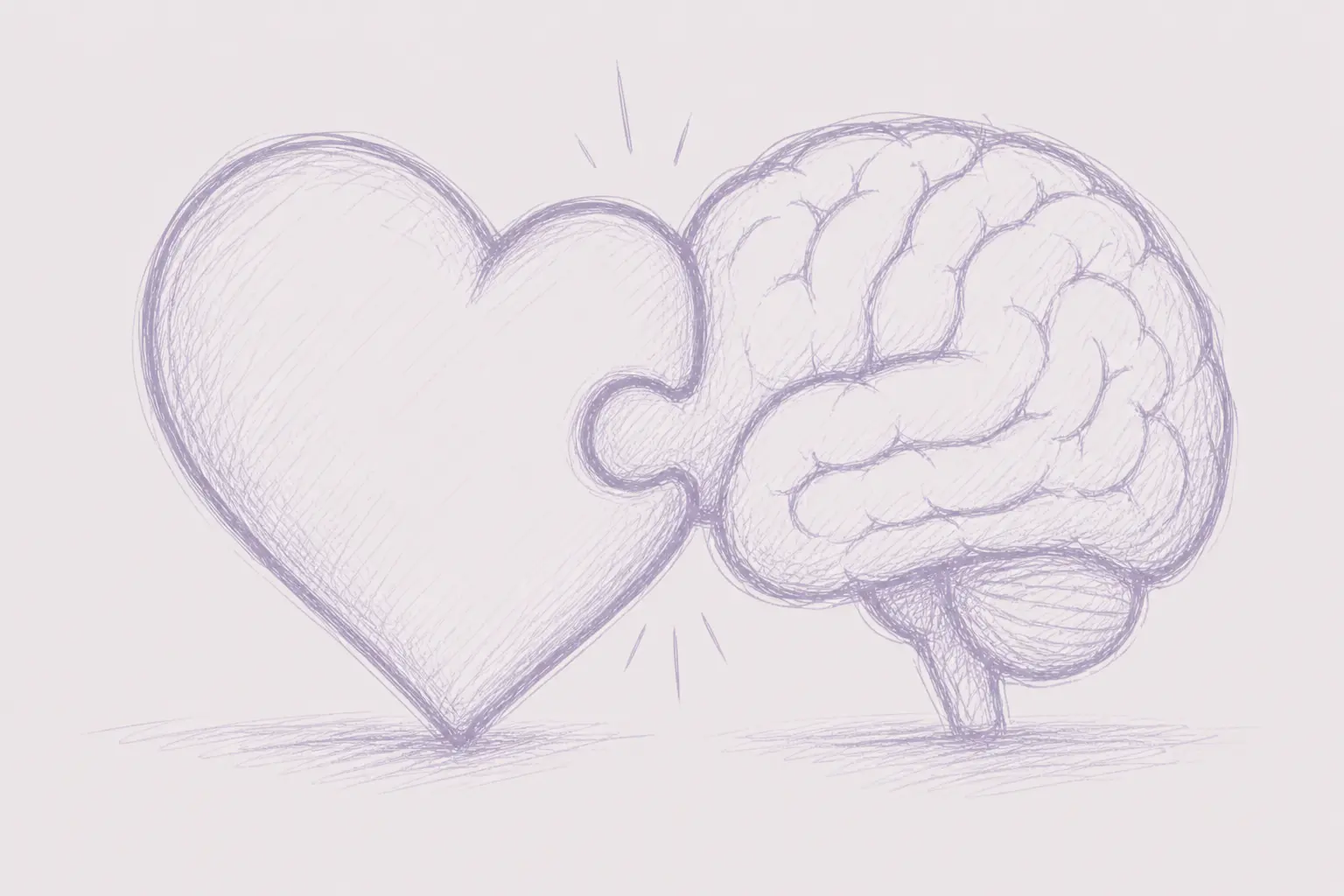
Something goes wrong. An email arrives with an edge. A conversation shifts without warning. The reaction comes in seconds: chest tight, the urge to snap back, or the opposite, a complete shutdown.
What happens next is where things get complicated. Emotions spill sideways, aimed at the wrong person at the wrong moment. Or they get packed down and come back later as irritability, a flat kind of tiredness, or something harder to trace. Emotional regulation is the skill that creates a gap between what you feel and what you do with it.

What Emotional Regulation Actually Means
Emotional regulation is the capacity to experience difficult feelings without being completely directed by them.
Yale School of Medicine describes it as the linchpin of mental health, sitting underneath most psychological difficulties, from chronic anxiety to relationship patterns that keep repeating. Managing emotional responses is a skill. Skills can be built at any age.
The aim is a pause between the feeling and the action. That pause is what makes a considered response possible.
Why It Feels So Hard
Most people were never taught how to do this.
What gets passed down in most households is one of two patterns: suppress the feeling (push it down, keep going), or let the feeling run the whole response. Both create problems over time, though those problems look different from the outside.
The physiology adds its own layer. Intense emotion is a physical event. When the stress response fires, cortisol rises, heart rate climbs, and the prefrontal cortex, the part of the brain handling clear thinking and decisions, becomes much less accessible. Trying to reason through a flooded state often fails, because the brain during those moments can’t support it. Research from NIH shows that when difficult emotional material stays active in the brain’s self-referential networks, it becomes harder to process and put down. The body has to settle before the mind can work.
Starting with the Body
Because intense emotion begins in the body, regulation usually has to start there.
Lengthen the exhale. Extending the out-breath activates the parasympathetic nervous system: the physiological brake. Breathe in for 4 counts, out for 6 or 8. Do this for 3 minutes, not 30 seconds. The nervous system responds to duration.
Cold water on the face. The dive reflex: contact with cold water triggers a near-immediate drop in heart rate and a shift in state. It sounds too simple. It works.
Move. Emotion generates physical energy. That energy needs somewhere to go. A walk, a run, shaking out your hands and arms. Sitting still with a large feeling tends to intensify it.
The aim of these techniques is enough settling to re-engage the thinking brain.
Check out the Free · Vision to Action Planner
More infoWorking with the Mind
Once the body has settled, the mind becomes available.
Name the feeling precisely. “Upset” covers too much ground. Getting specific, frustrated, embarrassed, scared, disappointed, activates a labeling process in the prefrontal cortex that measurably reduces emotional intensity. Naming it accurately lowers its force.
Find the thought underneath. Most emotional reactions run alongside a very fast thought. “They don’t respect me.” “I always get this wrong.” “This is going to fall apart.” Finding that thought and looking at it directly creates something to examine. The thought is worth more scrutiny than the first reaction suggests.
Ask what the feeling is pointing at. Anger can signal a real boundary crossed. Anxiety can point at a genuine risk. Sadness at something actually lost. Regulation lets you hear the signal clearly, without being overwhelmed by the volume.
The link between negative self-talk and emotional reactivity runs close. The voice underneath the feeling often decides whether the reaction escalates or settles.
Building the Baseline
Emotional regulation in a crisis depends on what you’ve built between crises.
Sleep matters more than most people account for. Sleep deprivation degrades emotional regulation faster than almost any other variable: tired people react more intensely and recover more slowly. Harvard Health documents consistently that behavioral change requires understanding patterns, and disrupted sleep dismantles patterns faster than most other factors.
Regular movement and a lower baseline stress level raise the threshold at which the system floods. The work of regulation happens in ordinary life, not just in the moments when something goes wrong.
When the Pattern Runs Deeper
For some people, the difficulty goes beyond specific triggers.
If intense reactions happen frequently, feel out of proportion to what’s in front of you, or leave consistent damage in relationships or at work, something more structural is worth examining. High-functioning anxiety often runs quietly underneath a competent-looking exterior for years. Overthinking loops can reflect an emotional system trying to process something it hasn’t been able to put down.
These patterns shift when they’re examined directly, usually with support. If this is something you want to work on, get in touch to book a coaching session.
Quiz: what’s blocking your success?
This quick quiz will help you uncover which mental or behavioural pattern might be holding you back from reaching your full potential. Identifying your specific blocker is the first step to overcoming it.
Read each question and choose the answer that best fits your situation.
No email or payment required to complete the quiz and receive your personalised results.
Once you know your main blocker, you’ll have clarity on what’s been holding you back. These patterns are not permanent traits, they are habitual ways of thinking and acting that can be changed with the right guidance and practice.
If you’re ready to overcome your specific blocker, email me to try a coaching session.
About the Author

Paloma Chiara
Certified Life Coach
Guiding you toward your best self through mindful transformation.
Contact me
The perfect time was last quarter.
Tell me where you're stuck. We'll build the systems around it.
Let's startRecent posts
-
How to Overcome the Fear of Raising Your Prices
Read blog -
How to Handle Criticism as a Founder Without Losing Confidence
Read blog -
How to Stop Micromanaging Your Team
Read blog -
The Arrival Fallacy (Why Success Doesn't Feel Like Enough)
Read blog -
Why Business Owners Can't Switch Off From Work
Read blog -
How to Set Boundaries with Your Team Without Feeling Like a Bad Boss
Read blog
Comment