
How to Handle Criticism as a Founder Without Losing Confidence
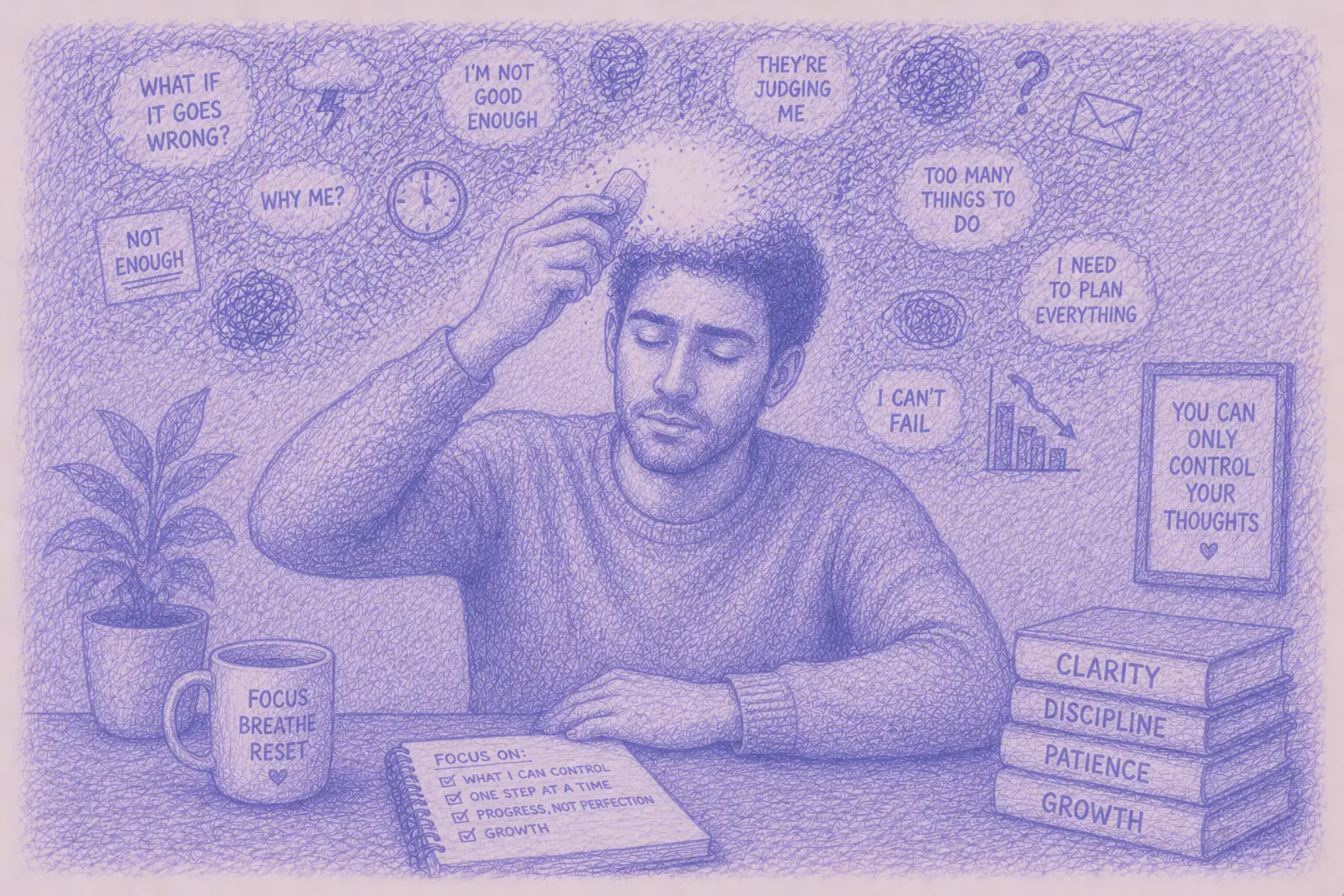
Someone leaves a two-line comment on a launch you spent four months on, and it’s the only line you remember by dinner. Not the 40 people who said nothing, not the handful who said it was great. The one line.
You know, logically, that one opinion isn’t a verdict. Your body didn’t get that memo. Your jaw is tight, you’ve reread the comment six times, and you’re already drafting a reply you’ll never send.



Why It Feels Personal When It’s Your Business
An employee’s work gets reviewed. A founder’s work gets reviewed too, except there’s no separation between the two, because you built the thing, priced the thing, and hired the people delivering it. Criticize the product and you’ve criticized 200 decisions you made yourself, most of them at 11pm.
That fusion is just what happens when your identity and your business share an address for long enough. If that sounds familiar, it’s worth reading about who you are outside the business you run, because the two questions are more connected than they look.
The Brain Doesn’t Know the Difference
Here’s the part that explains why a single comment can wreck an afternoon. The amygdala scans for threats constantly, and it can’t tell a psychological threat from a physical one. A sharp note on your work reads as danger, and the body reacts like danger: tight chest, racing thoughts, the urge to defend or disappear.
Harvard Business Review puts the deeper tension well: feedback sits between two real needs, the need to learn and grow, and the need to be accepted exactly as you are. Criticism seems to threaten the second one, so the nervous system treats it as an attack on the first.
Your reaction to a piece of feedback and whether that feedback is actually right are two separate questions, and they’re worth untangling before you respond to either.
Sorting the Signal From the Noise
Not every comment deserves the same weight, and treating them all as equally important is what makes criticism exhausting.
Ask three questions before you decide what to do with a note. Does this person actually use the product, or are they commenting from the sidelines? Have you heard this exact thing before, from someone else, in a different context? Would fixing it change a real outcome, or just soothe your discomfort about having been told?
A comment that clears all three is signal. Act on it. A comment that clears one, usually the last one, where you just want the sting to go away, is noise dressed up as feedback. Learning that difference is most of the skill. It also overlaps with what fear of failure does to your decisions, because a lot of founders fix noise specifically to avoid sitting with the discomfort a bit longer.

Check out the Free · Vision to Action Planner
More infoWhy the Loudest Voice Isn’t Always Right
A stranger’s one-line drive-by and a longtime client’s careful note don’t carry the same weight, even when they’re about the same flaw. One has skin in the outcome. The other has ten seconds and an opinion.
Research on self-affirmation backs up something useful here: people who first reconnect with their own values and competence, before receiving a hard note, process it with far less defensiveness than people who go in cold. The point is a steadier sense of your own worth going in, one that doesn’t depend on how the note reads.
That’s also why anonymous criticism stings more than it should. There’s no relationship behind it to weigh, so the brain fills the gap with worst-case assumptions.
How to Respond Without Reacting
The mechanism matters more than the mindset here. Read the note once, then step away for a few hours before drafting a reply. Nothing gets worse for waiting, and almost everything gets clearer.
Write the angry version first, in a document nobody sees. Get the “how dare they” out of your system on paper instead of in an email. Then write the version you’d send if this person were someone you respected and wanted to keep in your corner. Usually the second draft is shorter and considerably less defensive than the first.
I don’t hand a client a system I haven’t tested on myself, and this one came the hard way, teaching myself web development at 21 with no formal training and clients who could absolutely tell. Every clunky line of code came back as a comment, and for a while I read each one as a verdict on whether I belonged in the room. It took actual practice to separate “this part needs work” from “I am bad at this,” and that separation is the entire job now.
Building Confidence That Doesn’t Rise and Fall With Every Comment
Confidence that depends on everyone approving of the work is really just a mood that changes with your inbox.
The steadier version comes from a track record you trust: your own record of what’s worked, kept somewhere you can return to on the days a critic’s voice is louder than your own judgment. Part of building that steadiness is noticing when the running commentary in your head is doing more damage than the original comment ever could.
If criticism keeps landing harder than it should, and you can feel it costing you decisions you’d otherwise make with a clear head, that’s worth working through properly. Get in touch to talk it through in a session.
Quiz: what’s blocking your success?
This quick quiz will help you uncover which mental or behavioural pattern might be holding you back from reaching your full potential. Identifying your specific blocker is the first step to overcoming it.
Read each question and choose the answer that best fits your situation.
No email or payment required to complete the quiz and receive your personalised results.
Once you know your main blocker, you’ll have clarity on what’s been holding you back. These patterns are not permanent traits, they are habitual ways of thinking and acting that can be changed with the right guidance and practice.
If you’re ready to overcome your specific blocker, email me to try a coaching session.
About the Author

Paloma Chiara
Certified Life Coach
Guiding you toward your best self through mindful transformation.
Contact me
The perfect time was last quarter.
Tell me where you're stuck. We'll build the systems around it.
Let's startRecent posts
-
How to Take a Vacation as a Business Owner (Without the Guilt)
Read blog -
How to Overcome the Fear of Raising Your Prices
Read blog -
How to Handle Criticism as a Founder Without Losing Confidence
Read blog -
How to Stop Micromanaging Your Team
Read blog -
The Arrival Fallacy (Why Success Doesn't Feel Like Enough)
Read blog -
Why Business Owners Can't Switch Off From Work
Read blog
Comment