
How to Overcome Fear of Success in Your Business
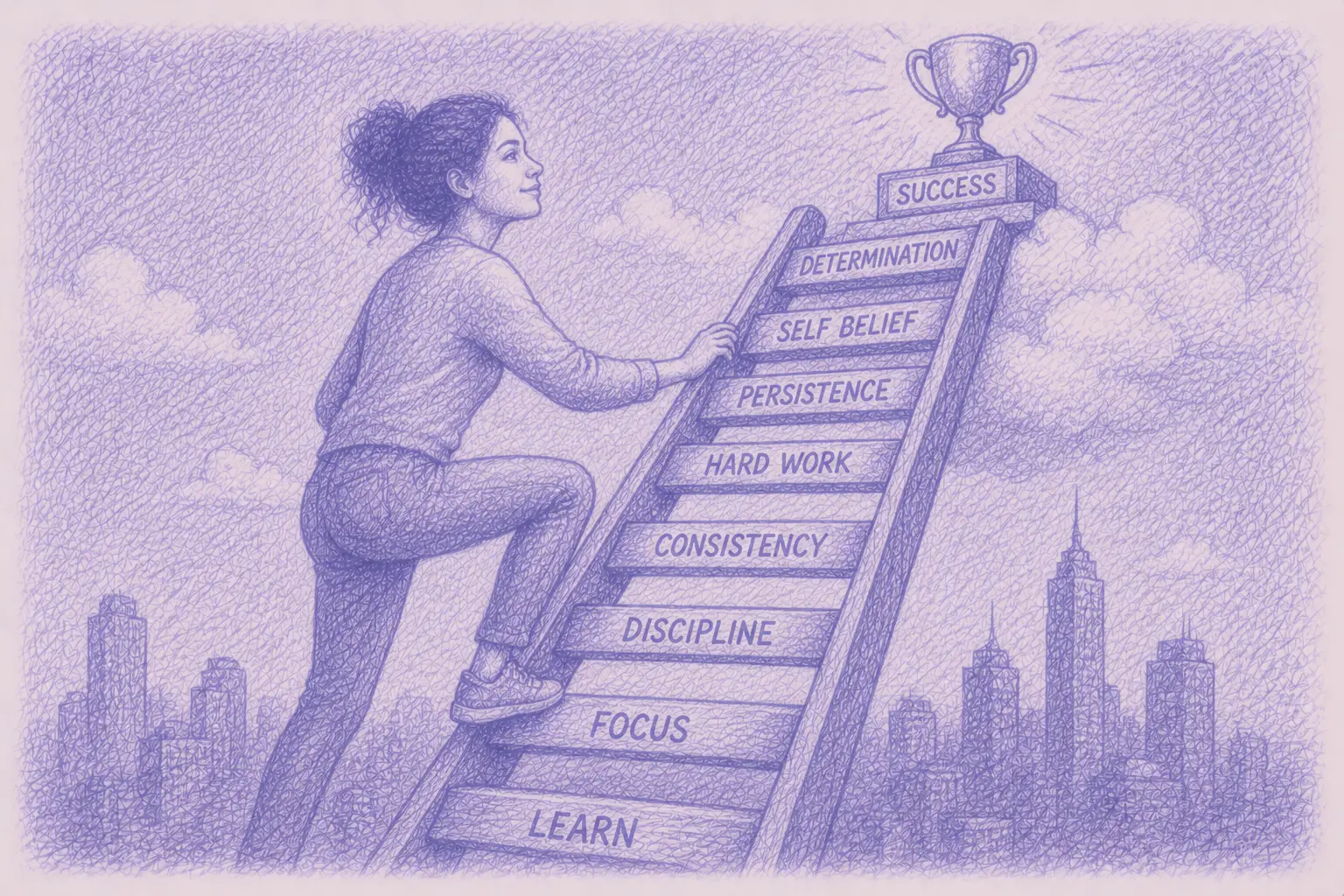
Some business owners get close to the thing they’ve been working toward and then slow down. The launch keeps moving. The bigger client gets a proposal that’s a little late or a little vague. Nothing dramatic happens, there’s just enough friction that the next level never quite arrives.
It’s easy to call that bad timing, or laziness. Often it’s something else: fear of what happens if it works. More visibility, more responsibility, more people depending on you, and a version of your life you haven’t tested yet.



What Fear of Success Actually Is
Fear of success is anxiety about the consequences of getting what you want. The goal still feels good. What feels risky is everything that comes attached to it.
Psychologist Matina Horner described it around the early 1970s, in research on how students imagined life after coming top of their class. Her early work focused on women. Later research found it in pretty much everyone.
For a founder, it rarely feels like fear. It feels like caution, or being realistic, or “it’s not the right moment yet.”
It also has a different shape from fear of failure. With fear of failure, the worry is that the plan won’t work. With fear of success, the worry is about what happens when it does.
Why Growth Can Feel Like a Threat
There’s research on this, and some of it is a bit strange.
In a 1978 study in the Journal of Personality and Social Psychology, students who received success feedback they couldn’t explain were more likely to pick a drug they’d been told would hurt their performance on the next test. The researchers called it self-handicapping: if you fail with a handicap, you have an excuse ready. (The effect showed up in the men in the study, and later replications were mixed, so hold it loosely.)
The mechanism is the useful part. When a win feels like luck, the next attempt feels like a public test you might fail. A small handicap gives you a way out of that test.
There’s also a body of work on fear of positive evaluation, which is distress about being judged favourably. A review of 10 years of that research, published in Depression and Anxiety, describes one explanation: positive evaluation moves you up a social hierarchy, and moving up can bring conflict with the people around you.
In business terms, being seen as successful changes how clients, peers, friends and family treat you. Part of your brain files that under risk.
How It Shows Up in a Business
It almost never looks like fear from the outside. More often it looks like this:
- Prices that stay low long after demand has outgrown them.
- A launch that’s always one more round of edits away.
- Turning down a bigger client because it “isn’t the right fit,” without being able to say why.
- Filling the week with small tasks right after a win, instead of building on it.
- Shrinking your results when someone asks how the business is going.
Any one of these can have a practical explanation. When several show up together, and they cluster around moments of growth, it’s worth looking underneath. The patterns behind self-sabotage are often the same ones, just pointed at a different fear.

Check out the Free · Vision to Action Planner
More infoName the Specific Cost You’re Afraid Of
“I’m scared of success” is too vague to work with. A more useful question: if this goes well, what am I afraid will happen next?
The answer is usually specific, and it usually falls into one of these:
- Responsibility. More clients, a bigger team, other people’s income depending on your decisions.
- Visibility. More people watching, which means more people who can criticise.
- Relationships. Outgrowing friends or peers, or being treated differently by them.
- Identity. If your sense of self is already tangled up with the business, growth changes you as well, and that can feel like losing something.
Write your answer down. Then ask a second question: is that cost real, or is it a guess?
Some of it will be real. A bigger team does mean more responsibility. But a lot of it is a prediction your brain made a long time ago and never checked.
One client of mine, a startup CEO, carried heavy guilt about the employees. We could have kept working on the operations, but the block was emotional. Reframing that guilt is what freed the CEO to lead.
Plan for the Version of Success You’re Dreading
Once you know the specific cost, you can plan for it. The fear tends to live in the parts you haven’t thought through, so thinking them through takes a lot of the charge out.
- If it’s responsibility: decide now what support you’d add at the next stage. A hire, a contractor, a system that holds things you currently hold in your head.
- If it’s visibility: decide what you will and won’t share publicly, and whose feedback you’ll actually take on board.
- If it’s relationships: talk to the people you’re worried about. Ask before you assume how they’ll react.
- If it’s identity: keep something in your week that has nothing to do with the business.
Then take one growth step small enough to survive the fear. Raise one price. Send the proposal. Let a piece of good news stand without shrinking it.
Afterwards, compare what actually happened with what you predicted. Write both down. That comparison is the evidence your brain needs to update the old prediction, and it usually takes a few rounds before it sticks.
When It Keeps Coming Back
Some versions of this go deep. If the fear traces back to how success was treated in your family, or to a time when standing out got you punished, a therapist is the right person for that part.
For a lot of business owners, it’s more workable than that. It’s a habit of thinking that shows up at the same moments, and habits can be traced and changed with practice.
That’s the work I do with business owners and professionals. We find what’s actually behind the hesitation, with questions that get to the root of it, then build the systems and accountability so the next step happens. If that’s what you need, write to me and we’ll set up a call.
Quiz: what’s blocking your success?
This quick quiz will help you uncover which mental or behavioural pattern might be holding you back from reaching your full potential. Identifying your specific blocker is the first step to overcoming it.
Read each question and choose the answer that best fits your situation.
No email or payment required to complete the quiz and receive your personalised results.
Once you know your main blocker, you’ll have clarity on what’s been holding you back. These patterns are not permanent traits, they are habitual ways of thinking and acting that can be changed with the right guidance and practice.
If you’re ready to overcome your specific blocker, email me to try a coaching session.
About the Author

Paloma Chiara
Certified Life Coach
Guiding you toward your best self through mindful transformation.
Contact me
The perfect time was last quarter.
Tell me where you're stuck. We'll build the systems around it.
Let's startRecent posts
-
How to Overcome Fear of Success in Your Business
Read blog -
How to Overcome the Fear of Hiring in Your Business
Read blog -
How to Stop Shiny Object Syndrome in Your Business
Read blog -
How to Stop Feeling Guilty for Not Working
Read blog -
How to Overcome the Fear of Self-Promotion as a Business Owner
Read blog -
How to Take a Vacation as a Business Owner (Without the Guilt)
Read blog
Comment