
Can a Life Coach Help You with Your Career?
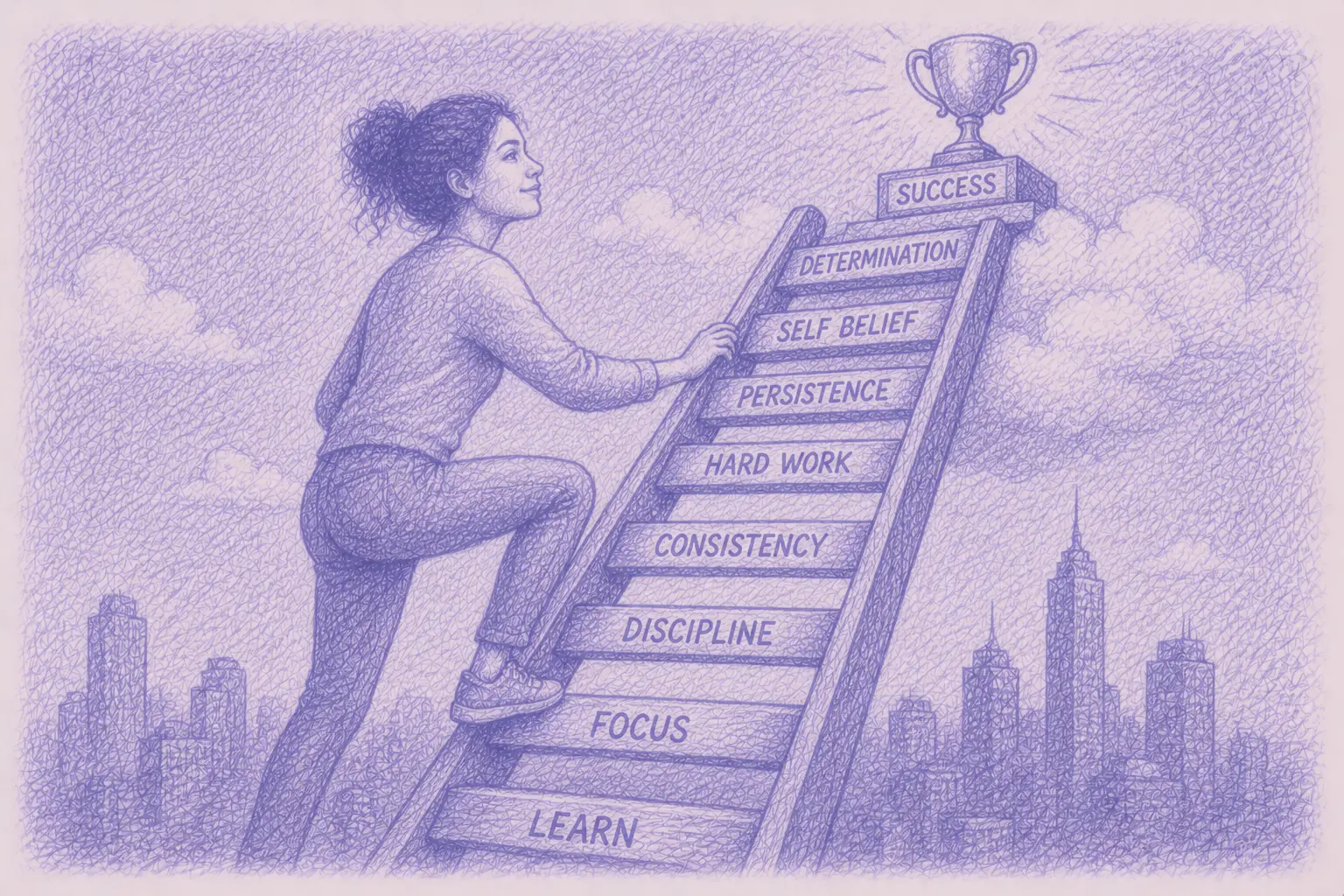
A life coach won’t get you a job. What one can do is help you figure out why you’re stuck, name what you actually want, and build a plan to get there.
That’s a different kind of help than a recruiter or a career counselor gives you. It’s about the mindset that’s been running underneath your career decisions, often without you noticing.
Where Career Coaching Actually Helps
Career Transitions
Switching industries, moving into a new role, or coming back after time away all bring the same problem: you don’t know what you’re allowed to want, or whether it’s realistic.
A coach helps you separate transferable skills from job-title assumptions, then builds a plan instead of leaving you to figure it out through trial and error. If fear of failure is what’s actually keeping you in a job you’ve outgrown, that’s the real conversation, not the resume.
Most people rewrite their resume before they’ve even named what they want next. That’s backward. Get clear on the target first, and the resume writes itself.
Goal Setting and Follow-Through
Most professionals can name a vague direction. Few can name a specific target with a deadline attached.
A coach breaks a big, fuzzy ambition (“I want to lead a team”) into steps you can act on this month, and holds you accountable to them. If you’ve never set a concrete career goal, start there before anything else.
Work-Life Balance
A demanding career doesn’t leave much room for a life. Coaching isn’t about hustling harder, it’s about building boundaries you’ll actually keep.
That means blocking time, saying no to things that don’t serve the goal, and treating rest as part of the plan instead of what’s left over. If you’re already running on empty, burnout from work is worth reading before you set another goal on top of it.
Confidence
Low self-confidence shows up as hesitation: the promotion you didn’t ask for, the raise you didn’t negotiate, the idea you didn’t pitch.
A coach works with you on the specific belief that’s blocking you, not generic pep talks. If the voice in your head keeps telling you you’re not qualified to be where you are, that’s imposter syndrome, and it’s more common at the senior level than most people admit.

Check out the Free · Vision to Action Planner
More infoCommunication and Networking
Careers move on relationships as much as results. Most people either avoid networking or do it badly, treating it like a transaction instead of a real connection.
Harvard Business Review’s research on networking found that people who reframe networking as learning, rather than self-promotion, actually enjoy it more and do it better. A coach can help you build that skill deliberately instead of winging it at every conference.
What a Career Coaching Relationship Looks Like
Clarifying what you actually want. Self-assessment exercises and pointed questions, not a personality quiz. The goal is clarity you can act on, not another label.
Building a roadmap. Once the goal is clear, you need short-term steps, long-term milestones, and a way to track whether you’re actually moving.
Closing skill gaps. A coach names what’s missing (a certification, a portfolio, a specific kind of experience) and points you toward it instead of leaving you to guess.
Handling setbacks without spiraling. Every career has a bad stretch. What a coach adds is a way to process it that doesn’t tank your momentum for the next three months.
I taught myself web development at 21, with six months to become financially independent and no plan B. What got me through wasn’t talent, it was breaking an overwhelming skill into pieces I could actually learn in order. That’s the same structure I bring to a client’s career transition: find the next right step, not the whole staircase at once.
Psychology Today’s reporting on career transitions makes a point worth repeating: trying to navigate a transition entirely alone tends to slow people down, not speed them up. Having someone in your corner who isn’t your boss, your partner, or your best friend changes what you’re willing to admit out loud.
Take someone switching from a stable IT job into graphic design. The obstacle usually isn’t skill, it’s permission: the belief that starting over at 35 means starting from zero. A coach’s job there is to build the portfolio plan and hold the person accountable to it while that fear is still loud.
Or take someone who’s technically qualified for a leadership role but freezes in meetings. That’s not a skills gap, it’s a confidence gap, and it responds to practice and structure a lot faster than most people expect once they’re finally naming it directly instead of pushing through in silence.
Signs It’s Time to Get Help
You don’t need to be in crisis to bring in a coach. A few signals are worth paying attention to on their own:
- You’ve had the same “I should really change something” thought for over six months without acting on it.
- You get offered opportunities and talk yourself out of them before anyone else weighs in.
- You’re successful on paper and still dread Monday.
- You know what you want, but every time you try to plan it, you end up back at square one.
Any one of those on its own is normal. All four at once is usually the moment people finally book a first session, often after putting it off for a year or more.
A life coach isn’t a career counselor or a job placement service, and won’t pretend to be. What they’re good for is the part underneath the job search: the goals you haven’t said out loud, the confidence gap, the plan you keep putting off. Get that part right and the tactical career moves get a lot easier to make.
If you’re facing a career decision you keep circling without landing on, get in touch.
Quiz: What Is Blocking Your Success?
This quick quiz will help you figure out which mental or behavioral pattern might be holding you back from achieving your full potential. Identifying your specific success blocker is the first step toward breaking through to new levels of achievement and fulfillment.
Read each question and choose the answer that feels most true to your situation.
No email or payment is required to complete the quiz and receive your personalized insights.
Once you have your primary success blocker, you have clarity about what’s been holding you back. This awareness is powerful—many people spend years struggling without understanding the specific pattern that’s limiting their progress.
Remember, these patterns aren’t permanent character traits but rather habitual ways of thinking and behaving that can be changed with the right guidance and practice.
If you’re ready to break through your specific blocker and achieve the success you know you’re capable of, send me an email to try out a coaching session. Your breakthrough awaits!




About the Author

Paloma Chiara
Certified Life Coach
Guiding you toward your best self through mindful transformation.
Contact me
The perfect time was last quarter.
Tell me where you're stuck. We'll build the systems around it.
Let's startRecent posts
-
How to Take a Vacation as a Business Owner (Without the Guilt)
Read blog -
How to Overcome the Fear of Raising Your Prices
Read blog -
How to Handle Criticism as a Founder Without Losing Confidence
Read blog -
How to Stop Micromanaging Your Team
Read blog -
The Arrival Fallacy (Why Success Doesn't Feel Like Enough)
Read blog -
Why Business Owners Can't Switch Off From Work
Read blog
Comment