
What High Functioning Anxiety Actually Feels Like
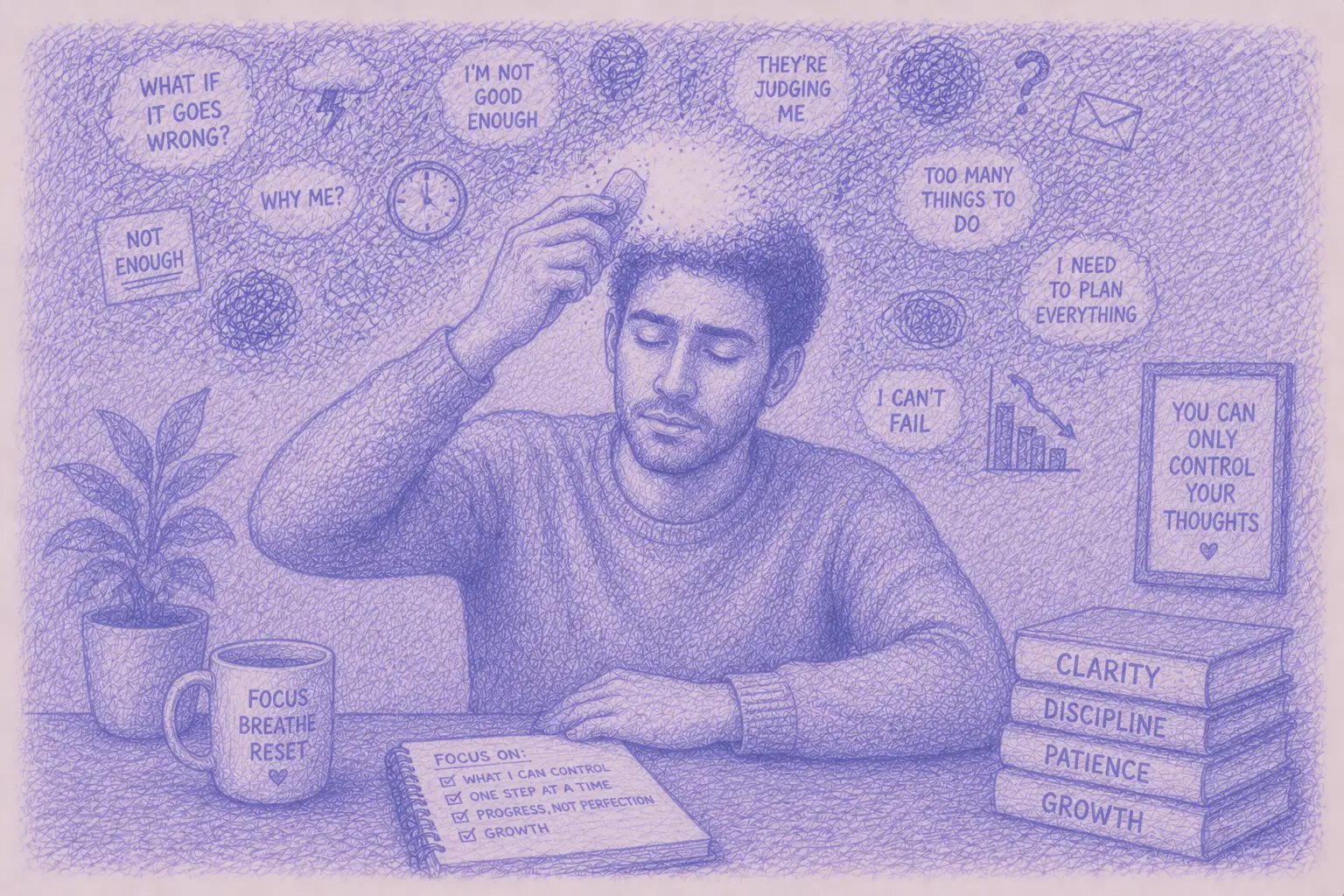
You get things done. Meetings attended, emails answered, plans made. To the people around you, you look like someone who has it together.
Inside, there’s a low hum running. A background noise that says something is about to go wrong. That you missed something important. That it’s only a matter of time before the whole thing unravels.

What High Functioning Anxiety Is
High functioning anxiety isn’t an official diagnosis. You won’t find it in the DSM-5. What it describes is a pattern: persistent anxiety that coexists with, and in many cases drives, a high level of external performance.
According to the Mayo Clinic, people who experience this tend to appear responsible, reliable, and driven. They show up on time, keep their commitments, and push through discomfort. What’s invisible is the worry underneath: the constant preparation for worst-case scenarios, the inability to rest without guilt, the loop of “am I doing enough” that doesn’t switch off when the day ends.
It’s anxiety wearing a productive face.
The Signs That Point to It
Some patterns show up consistently.
Constant overthinking. A conversation that happened four days ago. A decision you already made and keep second-guessing. You’re still running it back, checking for what you might have missed. There’s more on breaking this particular loop if that one resonates.
Bracing for outcomes that haven’t arrived. Building detailed mental scenarios of failure before anything has gone wrong. What starts as preparation tips into a kind of perpetual low-grade alarm.
Difficulty switching off. Rest feels like falling behind. Time off triggers guilt rather than relief. The productivity is real, but the engine running it isn’t enthusiasm or curiosity. It’s the sense that something bad happens if you stop.
People-pleasing as a safety mechanism. Saying yes when you mean no, smoothing things over, making yourself useful to avoid conflict or disapproval. The mechanism is about safety, and the pattern tends to expand quietly if nothing interrupts it.
Physical signals. Tight chest. Jaw tension. Headaches that tend to arrive on Sunday evenings. The body runs the anxiety even when the mind is fully occupied with being fine.
Check out the Free · Vision to Action Planner
More infoWhy High Achievers Run This Way
Achievement and anxiety can reinforce each other over years, without either one naming the other.
If worry has reliably produced results, the brain learns to treat it as useful. The dread becomes part of the preparation. Switching it off starts to feel risky, because some part of the brain genuinely believes it might be what’s keeping everything together.
Psychology Today notes that high-achieving adults often learned early that performance and productivity are how you stay valued, stay safe, or avoid criticism. The anxiety wasn’t irrational. At some point in the past, it was an effective strategy.
The problem is that a strategy built for one context rarely stays contained to it.
The Exhaustion It Creates
High functioning anxiety is expensive, even when you can’t point to exactly what it’s costing you.
You’re managing your workload. And you’re also managing the internal commentary about your workload. The performance review in three weeks. The email that felt slightly off. The sense that you’re one missed thing away from everything unraveling.
This is why people with high functioning anxiety often describe a specific kind of tired: not physical tiredness from doing too much, but something closer to the exhaustion of sustained vigilance.
HelpGuide’s research overview points out that chronic anxiety raises cortisol levels and disrupts sleep quality even when the person isn’t consciously aware of feeling anxious. The nervous system runs on alert around the clock. Over time, that catches up.
The connection to burnout from overwork is real. The fuel source runs dry eventually, and the early signs are easy to dismiss as normal until they aren’t.
How to Work with It
A few things tend to make a real difference.
Separating anxiety from drive. Drive and anxiety can coexist for years before it becomes clear they’re different things. Genuine motivation doesn’t require dread to function. Finding out whether you can want something without the anxious engine underneath is one of the more meaningful shifts available, and it usually requires some deliberate testing rather than just deciding to feel differently.
Distinguishing rumination from problem-solving. Useful thinking arrives somewhere: a decision or a clearer view. Rumination circles the same content without landing anywhere. Once you can tell them apart reliably, you can respond to each one differently instead of treating every worried thought as something that needs solving.
Working with the nervous system. Anxiety lives in the body as much as in thoughts. Consistent practices, breathwork, regular movement, sleep structure, lower the baseline level of alert the system is running on. These work in ways that willpower and reframing alone can’t replicate.
Going under the surface pattern. High functioning anxiety often protects something deeper: a belief that your worth is tied to your output, a fear of what happens when you stop performing, an old pattern around what it cost to let your guard down. Working with that root, rather than just managing the visible symptoms, is where lasting change tends to happen.
If any of this sounds familiar, reach out to book a coaching session. This kind of pattern is exactly what structured, one-to-one work is designed for.
Quiz: what’s blocking your success?
This quick quiz will help you uncover which mental or behavioural pattern might be holding you back from reaching your full potential. Identifying your specific blocker is the first step to overcoming it.
Read each question and choose the answer that best fits your situation.
No email or payment required to complete the quiz and receive your personalised results.
Once you know your main blocker, you’ll have clarity on what’s been holding you back. These patterns are not permanent traits, they are habitual ways of thinking and acting that can be changed with the right guidance and practice.
If you’re ready to overcome your specific blocker, email me to try a coaching session.
About the Author

Paloma Chiara
Certified Life Coach
Guiding you toward your best self through mindful transformation.
Contact me
The perfect time was last quarter.
Tell me where you're stuck. We'll build the systems around it.
Let's startRecent posts
-
How to Overcome the Fear of Raising Your Prices
Read blog -
How to Handle Criticism as a Founder Without Losing Confidence
Read blog -
How to Stop Micromanaging Your Team
Read blog -
The Arrival Fallacy (Why Success Doesn't Feel Like Enough)
Read blog -
Why Business Owners Can't Switch Off From Work
Read blog -
How to Set Boundaries with Your Team Without Feeling Like a Bad Boss
Read blog
Comment