
Why is Life Coaching Effective?

Life coaching works for one main reason: it closes the gap between knowing what to do and actually doing it.
Most of my clients already know what they should change. They’ve read the books. They could probably write the plan themselves.
What they’re missing is someone outside their own head who asks the questions they keep skipping, plus a structure that makes the next step hard to dodge.
So is it effective? Yes and no. It depends on what kind of problem you’re carrying and what you’re willing to do between sessions. Here’s how it works, piece by piece, and where it falls short.
Why Coaching Works When Advice Doesn’t
Advice assumes the problem is missing information. For business owners and senior professionals, it rarely is.
You already know delegating would free up your week. You know the inbox doesn’t need you late at night. Knowing sits on one side, behavior sits on the other, and the space in between is full of guilt, perfectionism and the fear of losing control.
A coach works in that space.
The research backs this up more than people expect. One large study found coaching can perform on par with therapy for well-being. Coaching is a younger field than therapy and the evidence is still building, but what exists is encouraging.
The Questions Do Most of the Work
The core tool in coaching is a good question. A specific one, asked at the right moment, that makes you stop instead of reaching for the answer you’ve already prepared.
When you ask yourself why you haven’t done something, you get the same answer every time. “I’m busy.” “Next month, when things calm down.”
When someone else asks “what happens if you hand this off and it goes badly?”, you get a different answer. Usually it’s closer to the real one.
That’s the part people underestimate. You can’t really surprise yourself with your own questions, because you already know which ones you’re avoiding.
Root Cause Before Strategy
Strategies fail when they’re bolted onto a problem you haven’t looked at properly.
If you put off a proposal because you’re scared it won’t be good enough, a new to-do app won’t fix it. You’ll just procrastinate inside the app.
So the first job in coaching is finding what’s actually driving the behavior. With high achievers it’s often one of a handful of things: perfectionism, guilt about resting, an identity built on being the person who handles everything, or a fear of being found out. That last one is why imposter syndrome comes up so often with people who are, on paper, very successful.
Once the real block has a name, the strategy gets a lot simpler. Sometimes it almost writes itself.
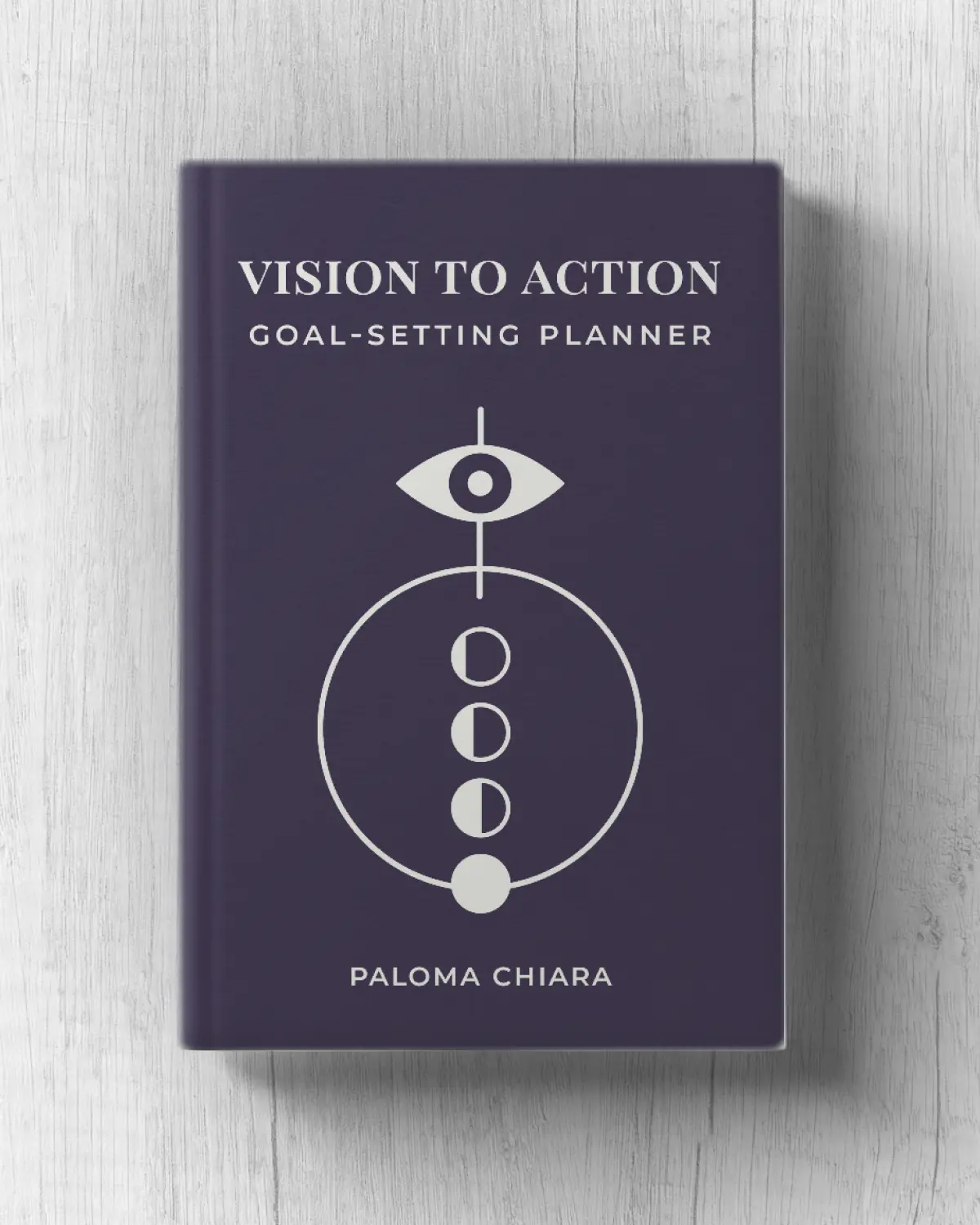
Check out the Free · Vision to Action Planner
More infoSystems That Fit How You Actually Work
Mindset work on its own stays abstract. You can understand your perfectionism perfectly and still lose a whole afternoon to it.
That’s why the second half of coaching is design: how your calendar is built, what you say to clients when they push a boundary (written out word for word), and clear rules for what gets delegated and to whom. The system has to fit your real week, with all its mess, or you’ll abandon it within a month.
I worked with a designer who’d spent 14 years fighting overthinking and perfectionism, with no line at all between work and the rest of life. Willpower hadn’t fixed it in 14 years, so we stopped relying on it. The fix was a time limit set before starting: “2 hours to research, then I start.” A task with no end point is where perfectionism thrives, so we gave every task an end point.
Accountability That Actually Works
Accountability is the most obvious benefit of coaching and also the most misunderstood one. Done well, it’s a feedback loop.
You commit to something specific. You come back. Either you did it or you didn’t.
If you didn’t, the useful part is figuring out why, as specifically as possible, so the next attempt has a better chance. “I didn’t have time” is where that conversation starts.
HBR describes the willingness to act on what comes up as the real test of whether someone is ready to be coached. I agree. If you show up to sessions and do nothing in between, coaching won’t work, and that’s on you.
Repetition matters here too. A new behavior has to be repeated for a while before it runs on its own, and weekly check-ins keep you repeating it long enough for a habit loop to form. This is also why coaching does well with procrastination. If that’s your main block, I wrote a separate piece on how life coaching helps you stop procrastinating.
An Outside View of Your Own Patterns
When you’re inside a pattern, it doesn’t look like a pattern. It looks like a busy month. Then another busy month.
A coach notices the repeats because they hear about your week, every week. “This keeps happening around client deadlines” is a lot harder to brush off when someone else is the one saying it.
The coach also has no stake in your decisions. Your partner, your cofounder and your team all do. Their advice comes with their own interests attached, even when they mean well, and you know it, so you discount it.



Where Life Coaching Isn’t Effective
Coaching has limits, and pretending it doesn’t is how people end up disappointed.
It’s the wrong tool for clinical depression, trauma, or anxiety that stops you from functioning day to day. Those need a licensed therapist. I wrote more about where that line sits in can a life coach help with anxiety.
It also won’t work if you want someone to hand you the answers. A good coach asks what you think first and fills the gaps after. If you want to be told exactly what to do, hire a consultant (there’s nothing wrong with that, it’s just a different job).
And it won’t work without the work between sessions. The session itself is about an hour. Everything that changes happens in the rest of the week.
Who Gets the Most Out of It
Coaching works best for people who are already capable and already busy. They’re stuck in a loop they can see clearly but can’t get out of alone.
Some of the loops I see most often:
- Running on empty and calling it ambition, which is how burnout from work builds up without you noticing.
- Refusing to delegate because letting go of control feels like a risk you can’t afford.
- Making every decision yourself until you’re too tired to make good ones.
- Setting big goals every January that never leave the notebook.
If one of those sounds familiar, coaching is a reasonable bet. If you’re not sure whether you need a coach or a therapist, figure that out first, and be honest with yourself about the answer.
What to Expect From the First Few Sessions
The first sessions are mostly questions. What’s going on, what you’ve already tried, and what “better” would actually look like in your week.
Then it gets specific. You leave each session with a short list of concrete actions and the reason behind each one, because a task you don’t understand the point of is easy to skip.
Progress won’t be a straight line. Some weeks you’ll do everything. Some weeks you’ll do nothing, and those weeks are often the most useful ones to talk about, because they show exactly where the system breaks.
If you’d like to explore working together, get in touch.
Quiz: What Is Blocking Your Success?
This quick quiz will help you figure out which mental or behavioral pattern might be holding you back from achieving your full potential. Identifying your specific success blocker is the first step toward breaking through to new levels of achievement and fulfillment.
Read each question and choose the answer that feels most true to your situation.
No email or payment is required to complete the quiz and receive your personalized insights.
Once you have your primary success blocker, you have clarity about what’s been holding you back. This awareness is powerful—many people spend years struggling without understanding the specific pattern that’s limiting their progress.
Remember, these patterns aren’t permanent character traits but rather habitual ways of thinking and behaving that can be changed with the right guidance and practice.
If you’re ready to break through your specific blocker and achieve the success you know you’re capable of, send me an email to try out a coaching session. Your breakthrough awaits!
About the Author

Paloma Chiara
Certified Life Coach
Guiding you toward your best self through mindful transformation.
Contact me
The perfect time was last quarter.
Tell me where you're stuck. We'll build the systems around it.
Let's startRecent posts
-
How to Stop Shiny Object Syndrome in Your Business
Read blog -
How to Stop Feeling Guilty for Not Working
Read blog -
How to Overcome the Fear of Self-Promotion as a Business Owner
Read blog -
How to Take a Vacation as a Business Owner (Without the Guilt)
Read blog -
How to Overcome the Fear of Raising Your Prices
Read blog -
How to Handle Criticism as a Founder Without Losing Confidence
Read blog
Comment